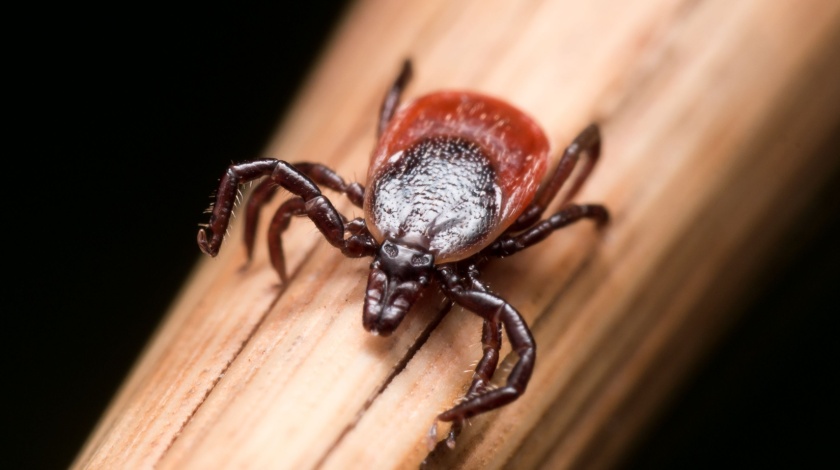
If you have tried tick sprays from the hardware store, spread granules along the fence line, or planted every “tick-repelling” herb the internet recommended—and you are still finding ticks on your kids, your dog, or yourself after spending time in the yard—you are not alone. Tick control is one of those areas where the gap between what people try and what actually works is enormous. The Ozark landscape around Bentonville is prime tick habitat, and managing ticks effectively here requires understanding what works, what does not, and why the right combination of strategies makes the difference between checking for ticks constantly and barely thinking about them.
The Direct Answer
What actually works for tick control around Bentonville homes is a layered approach: professional perimeter and yard treatment targeting the specific zones where ticks concentrate, property management that reduces tick habitat near the areas where your family and pets spend time, and personal protection habits that minimize exposure when you are in higher-risk areas. No single method eliminates ticks entirely, but the combination reduces encounters dramatically.
What Works: Professional Tick Treatment
Professional tick control is the highest-impact step a Bentonville homeowner can take. Here is why it works where consumer products fall short:
- Targeted application to tick hot zones: Ticks do not spread evenly across a property. They concentrate in specific areas—the transition zone between mowed lawn and wooded edges, along fence lines, in dense shrubs and ground cover, under leaf litter, and around structures where wildlife travels. Professional technicians identify these zones on your specific property and apply product precisely where ticks live and quest, rather than broadcasting product across the entire yard.
- Residual effectiveness: Professional-grade products applied to vegetation, leaf litter, and ground-level harborage maintain their effectiveness for weeks. Consumer sprays break down within hours to a few days, particularly in the summer heat and humidity. The sustained residual of professional treatment means ticks that move into the treated zone between visits are still exposed.
- Recurring service: A single treatment reduces the tick population temporarily, but the surrounding Ozark landscape continuously reintroduces ticks to residential properties through wildlife movement. Recurring professional treatment maintains the reduced population and prevents the rebound that follows a one-time application.
Allen Pest Management’s tick control services target the specific zones around Bentonville homes where ticks are most concentrated, using safe, eco-friendly products that are people- and pet-friendly.
What Works: Property Management
Property management does not replace professional treatment, but it amplifies the results significantly. The goal is to make your yard—particularly the areas near outdoor living spaces and play areas—less hospitable to ticks.
The strategies that make a measurable difference:
- Create a dry barrier strip: A 3-foot band of gravel, wood chips, or dry mulch between your mowed lawn edge and any wooded or brushy border creates a hot, dry zone that ticks avoid crossing. This simple physical barrier is one of the most effective tick-reduction measures available and costs very little to install.
- Mow frequently and keep grass short: Ticks quest (wait for hosts) on the tips of tall grass and low vegetation. Short grass eliminates questing perches and exposes the ground surface to sun and heat—conditions ticks cannot tolerate. Pay particular attention to fence lines, property borders, and shaded areas where grass tends to grow taller.
- Remove leaf litter: Leaf litter is the tick’s primary survival habitat—it retains the moisture ticks need and insulates them from temperature extremes. Clearing leaf litter from planting beds, fence lines, and the areas between your lawn and wooded borders removes this critical resource.
- Trim shrubs and low branches: Increasing sunlight and airflow at ground level near outdoor living areas makes those zones less comfortable for ticks. Prune low-hanging branches, thin dense shrub masses, and open up the canopy near patios, play areas, and dog runs.
- Relocate play equipment and seating: Move swing sets, sandboxes, outdoor furniture, and play areas away from wooded edges and into the sunny, open center of the yard—the area with the lowest tick density.
- Manage firewood and debris: Stack firewood neatly, off the ground, and away from the home and high-traffic yard areas. Remove brush piles, leaf piles, and ground-level debris that provide rodent harborage—rodents are the primary hosts for immature ticks.
- Discourage wildlife near the home: Secure trash cans, remove fallen fruit, avoid ground-level bird feeders, and screen the area under decks and porches to limit wildlife access. Every deer, raccoon, opossum, or rodent that visits your yard deposits ticks.
What Works: Personal Protection
Even with professional treatment and property management, personal protection adds an important layer—especially when spending time in higher-risk areas like trails, wooded borders, and gardens.
- Wear long pants tucked into socks and closed-toe shoes in wooded or brushy areas
- Apply EPA-registered tick repellent (DEET, picaridin, or IR3535) to exposed skin
- Treat clothing and gear with permethrin for long-lasting protection
- Perform full-body tick checks after outdoor activity—check behind ears, along the hairline, in armpits, behind knees, around the waistline, and on the scalp
- Shower within two hours of coming indoors
- Check pets thoroughly—run your hands through their fur, paying attention to ears, neck, between toes, and around the tail
- Tumble dry clothing on high heat for 10 minutes after outdoor activity—the heat kills ticks that may be on fabric
What Does NOT Work
A number of commonly recommended tick control methods sound reasonable but deliver poor results in practice:
- Consumer yard sprays and granules: Most over-the-counter products lack the concentration and residual effectiveness needed to control ticks in the Ozark environment. They may kill ticks on direct contact but do not maintain a treated zone that provides ongoing protection.
- “Tick-repelling” plants: Planting lavender, rosemary, or chrysanthemums around the yard does not produce enough volatile compound to repel ticks from an outdoor area. These plants may have minor repellent properties when their oils are extracted and concentrated, but as landscape plants they do not reduce tick populations.
- Guinea fowl and chickens: Often recommended as natural tick control. While these birds do eat ticks, the impact on the overall tick population around a Bentonville home is minimal compared to the number of ticks continuously introduced by wildlife. Birds are a supplement at best, not a solution.
- Broadcast-only treatment without targeting: Spreading granules uniformly across an entire lawn treats the areas where ticks are least likely to be (open, sunny lawn) while potentially under-treating the zones where they actually concentrate (wooded edges, dense vegetation, leaf litter, fence lines). Targeted application to the right zones is far more effective than broad coverage.
- Cedar oil and essential oil sprays: Marketed as natural tick repellents. While some essential oils show limited repellent properties in laboratory settings, real-world effectiveness on a residential property in the Ozarks is negligible compared to professional-grade products.
The Right Approach for Bentonville
Bentonville’s location in the Ozark region means tick pressure is not a temporary or occasional concern—it is a seasonal reality that returns every year from March through November. The surrounding forest, the abundant wildlife, and the humid environment continuously produce and distribute ticks into residential areas.
The homeowners who experience the fewest tick encounters are the ones who combine professional targeted treatment with smart property management and personal protection habits. Each layer reduces risk, and together they create a level of protection that no single approach can achieve alone.
Allen Pest Management has been providing tick control throughout Bentonville and Northwest Arkansas for over a decade. The company’s treatments target the specific zones on your property where ticks concentrate, using safe, eco-friendly products. Every service is backed by a 100% satisfaction guarantee—if ticks come back, so does the team.
If ticks are a concern around your Bentonville home, contact Allen Pest Management for a free estimate and get targeted tick control in place before the next time you—or your dog—step into the yard.