If you spend any time outdoors in Bella Vista—walking the trails, gardening in the backyard, letting the dog explore the yard, or simply enjoying the wooded landscape that makes this community so appealing—ticks are a reality you need to take seriously. Bella Vista’s natural environment is not just beautiful. It is one of the most tick-favorable landscapes in Northwest Arkansas, and the same features that draw people to live here are exactly what sustain the tick populations that homeowners, hikers, and pet owners encounter from early spring through late fall.
The Direct Answer
Ticks are common in Bella Vista because the community is built within and around the Ozark ecosystem—mature hardwood canopy, dense understory vegetation, leaf litter, abundant wildlife, and the humidity that the lakes, creeks, and tree cover maintain at ground level. Every one of these elements is a component of the tick lifecycle, and Bella Vista has all of them in concentration.
The Ozark Ecosystem—Tick Habitat by Design
Bella Vista’s wooded character is its signature. The community’s trail system, natural areas, and residential lots are woven through mature Ozark hardwood forest—oaks, hickories, maples, and cedars—with dense understory shrubs, ground cover, and deep leaf litter.
This is textbook tick habitat. Here is what each element contributes:
- Leaf litter and ground debris create a moist, insulated microclimate at the soil surface that ticks need to survive. Ticks are extremely sensitive to desiccation—they die quickly in hot, dry, exposed conditions. The leaf litter layer on the forest floor retains moisture and keeps temperatures moderate, providing the humidity ticks require at every life stage.
- Dense understory vegetation—shrubs, saplings, vines, and tall grass along trails and at the edges of wooded areas—is where ticks engage in a behavior called “questing.” Questing ticks climb to the tip of a grass blade, low branch, or leaf, extend their front legs, and wait for a host animal (or person) to brush past. The denser the vegetation along paths, trail edges, and yard borders, the more questing ticks you will encounter.
- Tree canopy shade maintains the cool, humid conditions at ground level that ticks depend on. Open, sunny, well-mowed areas are far less hospitable to ticks than shaded, wooded zones.
Wildlife—The Tick’s Transportation Network
Ticks do not fly, jump, or travel significant distances on their own. They rely entirely on host animals to move them through the landscape—and Bella Vista’s Ozark environment supports an abundant and diverse wildlife population that serves as the tick transportation and feeding network.
The key wildlife species that carry and distribute ticks in Bella Vista:
- White-tailed deer: The primary host for adult black-legged ticks (deer ticks), which are the species responsible for transmitting Lyme disease. Deer move freely through Bella Vista’s wooded areas, trails, and residential yards, depositing ticks throughout the landscape. Where deer are present, black-legged ticks follow.
- Mice, chipmunks, and small rodents: The primary hosts for immature (nymph and larval) ticks. Small rodents are abundant in Bella Vista’s wooded yards and natural areas, and they are responsible for maintaining and amplifying the tick population at the ground level where human and pet contact is most likely.
- Raccoons, opossums, skunks, and armadillos: All serve as tick hosts and all are common in Bella Vista’s suburban-woodland environment
- Feral cats and outdoor domestic cats: Pick up ticks in wooded and brushy areas and deposit them closer to homes
- Dogs: Family dogs that explore wooded areas, trail edges, and brushy terrain pick up ticks and bring them into the yard and the home
The density and variety of wildlife in and around Bella Vista ensures that ticks are continuously distributed across the landscape—through natural areas, along trails, into yards, and right up to the foundation of homes.
The Trails—Where People and Ticks Intersect
Bella Vista’s trail system is one of the community’s greatest assets. The Back 40, Blowing Springs, and the network of paved and natural-surface trails that wind through the community’s wooded terrain provide outstanding recreation and a quality of life that few places can match.
They are also prime tick encounter zones. The trail edges—where maintained surface meets unmaintained vegetation—are exactly where questing ticks position themselves. Hikers, runners, mountain bikers, and dog walkers who brush against trailside vegetation are the most common targets. Nymph-stage ticks, which are tiny (about the size of a poppy seed) and responsible for the majority of Lyme disease transmission, are particularly concentrated in the leaf litter and low vegetation along trail margins.
Which Tick Species Are in Bella Vista?
Northwest Arkansas is home to several tick species that homeowners and outdoor enthusiasts should be aware of:
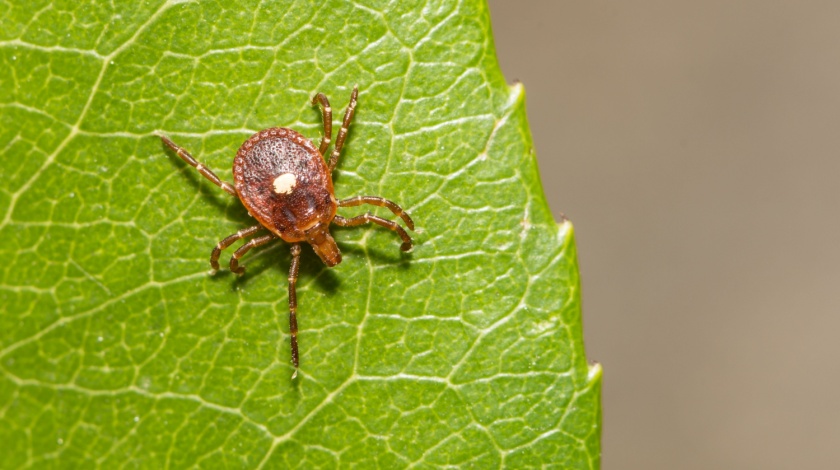
- Lone star tick: The most commonly encountered tick in the region. Aggressive feeders found in wooded and brushy areas. The adult female has a distinctive white spot on her back. Lone star ticks can transmit ehrlichiosis and tularemia and are associated with alpha-gal syndrome (red meat allergy)—a condition that has been increasingly diagnosed in the Ozark region.
- Blacklegged tick (deer tick): The species responsible for transmitting Lyme disease, anaplasmosis, and babesiosis. Smaller than lone star ticks and present in the wooded, deer-rich habitat throughout Bella Vista. Nymph-stage deer ticks are extremely small and often go unnoticed until they have been attached for hours.
- American dog tick: Larger, commonly found in grassy areas and trail edges. Can transmit Rocky Mountain spotted fever and tularemia.
- Brown dog tick: Primarily a pest of dogs; can establish indoor infestations in kennels and homes with heavy pet activity
Why Backyards Are Not Safe Zones
Many Bella Vista homeowners assume ticks are a trail problem and a woods problem—not a backyard problem. That assumption is wrong, and it is one of the reasons tick encounters at home catch people off guard.
Bella Vista backyards—particularly those that border wooded areas, natural space, or undeveloped lots—are tick habitats for the same reasons the trails are:
- Leaf litter accumulates along fence lines, in planting beds, and at the edges of wooded borders
- Wildlife crosses through yards routinely, depositing ticks
- Dense ornamental landscaping and ground cover provide the humid microclimate ticks need
- Dogs and outdoor cats pick up ticks in the yard and bring them closer to the home -and inside it
- Shaded areas under trees, along north-facing fence lines, and behind structures maintain the cool, moist conditions ticks favor
A backyard in Bella Vista that borders woods is functionally an extension of the tick habitat in the adjacent forest. Without management, tick populations in the yard can be as high as in the natural areas beyond the property line.
Reducing Tick Risk
The most effective approach combines personal protection with property management and professional treatment:
Personal protection:
- Wear long pants and closed-toe shoes when walking trails or working in wooded yard areas
- Use EPA-registered tick repellent on skin and clothing
- Perform full-body tick checks after outdoor activity—check behind ears, along the hairline, in the armpits, behind knees, and around the waistline
- Check pets thoroughly after they have been in wooded or brushy areas
- Shower within two hours of coming indoors, which helps wash off unattached ticks
Property management:
- Keep grass mowed short, particularly along fence lines and at the border between maintained lawn and wooded areas
- Remove leaf litter from planting beds, borders, and areas near the home
- Create a 3-foot gravel or wood chip barrier between lawn and wooded edges—this dry, hot zone discourages tick migration into the maintained yard
- Trim low-hanging branches and dense shrubs to increase sun exposure and airflow at ground level
- Remove brush piles, stacked firewood, and ground-level debris from near the home
- Discourage wildlife near the home by securing trash, removing fallen fruit, and avoiding ground-level bird feeders
Professional treatment:
Targeted tick control applied to the yard, fence lines, wooded borders, and transitional zones where maintained lawn meets natural vegetation provides the strongest layer of protection. Professional products applied to the areas where ticks quest and rest create a lethal zone that significantly reduces the tick population on the property.
Allen Pest Management provides tick control services throughout Bella Vista and Northwest Arkansas. The company’s treatments target the specific zones on your property where ticks are most concentrated, using safe, eco-friendly products that are people- and pet-friendly. Every service is backed by a 100% satisfaction guarantee.
If ticks are a concern around your Bella Vista home, trails, or backyard, contact Allen Pest Management for a free estimate and get professional tick control in place before the next outing.