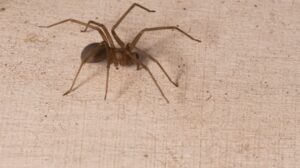
The brown recluse spider is one of the most talked-about pests in Arkansas, and for good reason—it is common here, it is frequently misidentified, and its bite can cause a serious medical reaction in some cases. Homeowners in Northwest Arkansas encounter this spider more often than those in many other parts of the country, simply because this region sits within the species’ established range. Our spider control services cover brown recluse activity throughout Bentonville, Fayetteville, Bella Vista, and the surrounding area.
Where Brown Recluse Spiders Are Found in Northwest Arkansas
Arkansas is within the documented native range of the brown recluse (Loxosceles reclusa), and the species is well-established throughout the state, including in Benton and Washington counties. This is worth stating directly because residents who moved to Northwest Arkansas from outside the brown recluse’s range sometimes assume the spider is uncommon here. It is not.
Inside structures, brown recluse spiders occupy dry, undisturbed spaces where they are unlikely to encounter larger animals. Common locations include:
- Storage boxes and bins in basements, attics, and garages
- Inside clothing, shoes, and gloves stored for extended periods
- Behind and beneath furniture that is rarely moved
- Inside wall voids and behind baseboards
- In cluttered outbuildings and sheds
They are nocturnal hunters and spend the majority of their time concealed. Homeowners often live in homes with established brown recluse populations for extended periods without being aware of them.
How to Identify a Brown Recluse
Accurate identification matters because many common spider species in Northwest Arkansas are mistaken for brown recluses. The three characteristics that reliably distinguish the brown recluse are:
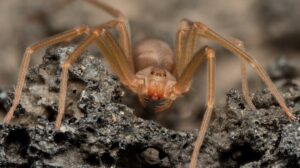
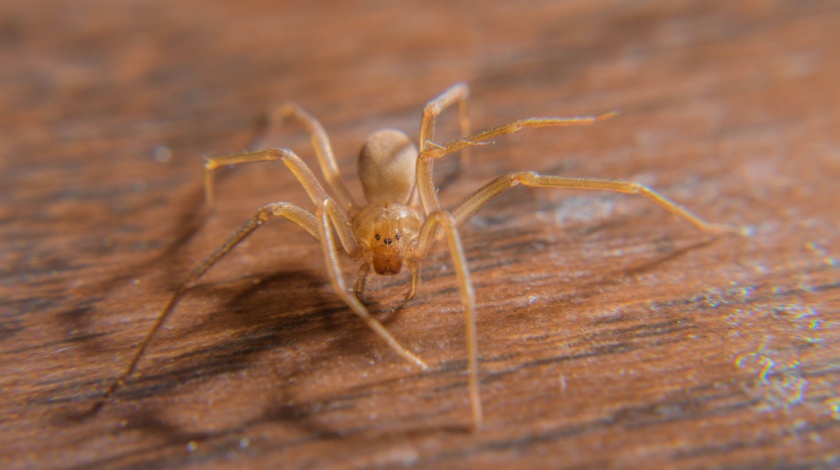
Six eyes in three pairs. Most spiders have eight eyes. The brown recluse has six, arranged in three groups of two in a semicircular pattern. This requires close observation but is definitive.
A violin-shaped marking on the cephalothorax. The dark, fiddle-shaped marking on the upper front body section—with the neck pointing toward the abdomen—is the feature most people associate with this species. It is useful but not unique to the brown recluse, and it can be faint in younger spiders.
Uniform abdomen coloration. The abdomen is solid tan to dark brown with no spots, stripes, or banding. Spiders with patterned abdomens are not brown recluses.
Body length ranges from roughly a quarter inch to three-quarters of an inch. Legs are long relative to body size and lack spines.
What the Real Risks Are
Brown recluse bites do occur in Northwest Arkansas, and a subset of bites can cause significant tissue damage. The necrotic skin lesions associated with brown recluse venom develop in some cases—not in all. Many bites result in minor reactions similar to other insect bites. Severe tissue damage is more likely in individuals with certain health conditions, and the outcome of any specific bite is not predictable in advance.
Bites almost always occur when the spider is accidentally pressed against skin—inside a shoe being put on, in clothing pulled from a storage area, or when a hand is placed on a surface where the spider is resting. The species does not pursue or attack. Awareness of where they are likely to be present and the habit of checking before reaching into storage areas or putting on stored clothing account for the majority of bite prevention.
Any bite that produces a spreading lesion, significant pain beyond the immediate site, or symptoms like fever or chills warrants prompt medical attention. Bringing a captured specimen to the appointment aids accurate diagnosis.
Prevention Steps for Northwest Arkansas Homeowners
- Replace cardboard storage boxes with sealed plastic containers in basements, attics, and garages
- Shake out shoes, boots, and gloves stored in garages or outbuildings before wearing
- Keep storage areas organized and reduce the volume of undisturbed clutter
- Seal gaps around baseboards, utility penetrations, and foundation cracks
- Use sticky trap monitors along baseboards in storage areas to detect activity and confirm identification
- Address any underlying insect issues that support spider populations—brown recluses follow their food source
When to Call a Professional
A single spider sighting does not indicate an established population. Repeated sightings, egg sacs in storage areas, or multiple individuals found in a short period suggest that spiders are living and reproducing inside the structure. Professional inspection and treatment is appropriate at that point.
Allen Pest Management provides spider control throughout Northwest Arkansas, including inspection of common harborage areas and targeted treatment for confirmed brown recluse activity. Contact us for a free estimate if you have ongoing spider concerns in your home.