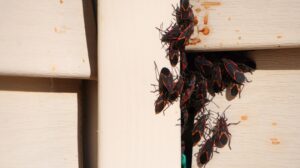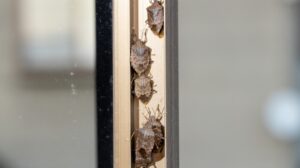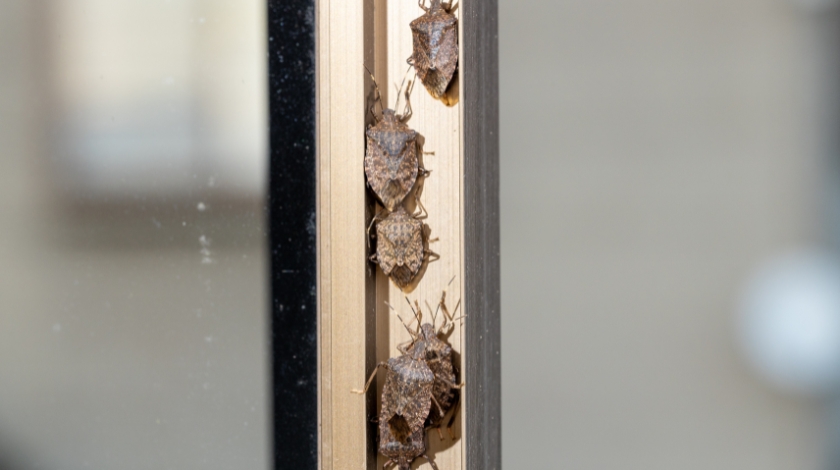
Stink bugs on a window screen in October are often looking for a sheltered place to spend the colder months. As daylight shortens and temperatures change, adults of certain species gather on buildings and explore small openings around the exterior. Our stink bug control services help you identify the insects and address the places where they are entering. In Fayetteville, understanding this seasonal behavior can explain both a sudden gathering outside and the occasional bug that appears indoors weeks later.
The House Becomes a Place to Spend Winter
During the growing season, plant-feeding stink bugs use outdoor vegetation for food. In fall, adults of species that overwinter in buildings shift toward protected resting sites. The brown marmorated stink bug is a familiar example of a species that can use houses this way. Other shield-shaped bugs have different habits, so identification remains useful before assigning every sighting the same explanation.
Gaps in bark and other natural shelters offer protection outdoors. Narrow spaces behind siding, beneath trim, and around roof edges can provide similar cover on a building. A bug exploring the wall may reach a sheltered crevice and remain there through colder weather. Some eventually travel deeper into the structure and reach an occupied room.
This sequence explains why a clean kitchen can still receive fall visitors. Their seasonal search centers on shelter, while their normal feeding and reproduction take place outdoors. Cleaning up visible insects helps you use the room comfortably, but the access route around the building is usually the more relevant prevention target.
Sunny Walls Can Become Gathering Places
A wall warmed by afternoon sun can attract noticeable activity during a cool stretch. You may see bugs resting on siding, door frames, or screens while another side of the house has very few. Sun exposure, nearby vegetation, building shape, and available crevices all influence where they gather.
Watch the location of those gatherings from the ground. A concentration beside an upper window or trim seam gives us a useful place to examine. Bugs may be resting on the surface, exploring a gap, or doing both. Following their movement for a few minutes can provide better information than simply recording that they are somewhere in the house.
Fayetteville properties vary in tree cover and exposure. A house beside wooded habitat can have a different pattern from a more open lot, and neighboring homes can experience different levels of activity. The conditions on your particular exterior help determine where inspection and maintenance should begin.
How They Reach Living Areas
Small openings around window frames, screens, doors, and utility penetrations can connect outdoor activity with sheltered building spaces. Loose weather stripping or a damaged screen corner may offer access during ordinary exploration. Open doors can admit individual bugs directly, especially when insects are already gathering near an entrance.
An indoor sighting may occur well after the initial entry. Insects resting in wall or attic spaces can become active during a warm period or move toward indoor light and warmth. A stink bug at a living room window in December may have entered the building during fall. That delay can make the source seem confusing if you focus only on the day of the sighting.
Keep a simple record when the pattern repeats. Note the room, window, and whether insects appear after sunny afternoons or temperature changes. The observations can help us connect indoor activity with exterior gathering locations and likely routes. A photograph also helps confirm which kind of bug is involved.
Why the Same House Can Have Problems Again
Recurring fall activity often reflects persistent conditions. A sheltered gap may remain accessible year after year, while nearby habitat continues to supply insects. Some overwintering insects also use chemical signals that encourage gathering. These factors can concentrate activity without indicating that the bugs are reproducing inside your walls.
The practical response is to examine the building before the next major gathering. Repairs to deteriorated seals and damaged screening can reduce access. Check the connections around fixtures and trim, since an intact window screen offers limited protection if a nearby frame gap leads into the structure.
Work at rooflines and upper siding should be handled with safe access and suitable materials. Vents, drainage openings, and weep paths need to retain their intended function. We can help identify pest entry concerns so you can prioritize appropriate maintenance instead of filling every visible opening indiscriminately.
Remove Indoor Bugs Without Spreading the Odor
Stink bugs release a defensive odor when disturbed or crushed. Gently collecting an accessible bug in a container can help avoid smearing it on a wall or curtain. Vacuuming can remove larger numbers, although the odor may linger inside the machine. Empty or replace the collection bag promptly according to the vacuum’s instructions and keep the insects contained during disposal.
Repeated spraying of visible indoor bugs can leave the sheltered source untouched. Product choice and application location should follow the label and the inspection findings. Foggers are a poor match for bugs concealed within structural gaps and can add unnecessary exposure in occupied rooms. Ask for a plan that explains both immediate removal and seasonal prevention.
If you find many bugs around a high window or inaccessible void, leave the area available for inspection. Opening finished walls or disturbing insulation before locating the route can add work without clarifying the source. We start with accessible evidence and the building’s exterior to guide the next steps.
Plan Around the Seasonal Pattern
We inspect the activity, identify likely access, and develop treatment recommendations for the conditions present. The timing influences what can be addressed immediately and what prevention work will be most useful before another fall. Visible insects and hidden overwintering adults may require different expectations as the season progresses.
For repeated stink bug sightings in your Fayetteville home, schedule an inspection with us. We will help you trace the seasonal pattern, manage the current nuisance, and prioritize the exterior improvements that can reduce future entry.