Wood damage inside your home is always a reason to pay attention, especially when the cause may be hidden beneath surfaces you cannot easily see. Carpenter ants and termites are two of the most common wood-damaging pests homeowners encounter, but they affect homes in very different ways. The signs they leave behind can help reveal what type of pest may be causing the problem and what steps should be taken next. When you need help identifying and addressing these issues, residential pest control services can provide a closer inspection and a targeted solution for your Bentonville home.
Start With the Type of Wood Damage Appearing Around Your Home
The condition of the wood around your home can provide important clues about what may be happening beneath the surface. Carpenter ants and termites can both affect wooden structures, but the warning signs they leave behind are often different. Paying attention to changes in the appearance, strength, and condition of wood can help reveal whether a pest problem may be developing.
Some signs that may point to wood-damaging pests include:
- Moisture-related wood damage: Softened or deteriorating wood near plumbing fixtures, roof leaks, windows, or exterior structures may create conditions where pests are more likely to establish activity. Moisture problems can make wooden materials easier for carpenter ants to use as nesting areas.
- Wood debris near nesting areas: Small piles of sawdust-like material around trim, beams, window frames, or wall openings may indicate that carpenter ants are removing wood from inside a structure. This debris can provide a clue that activity is occurring nearby.
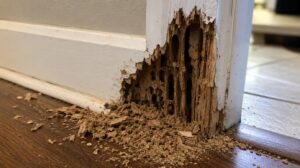
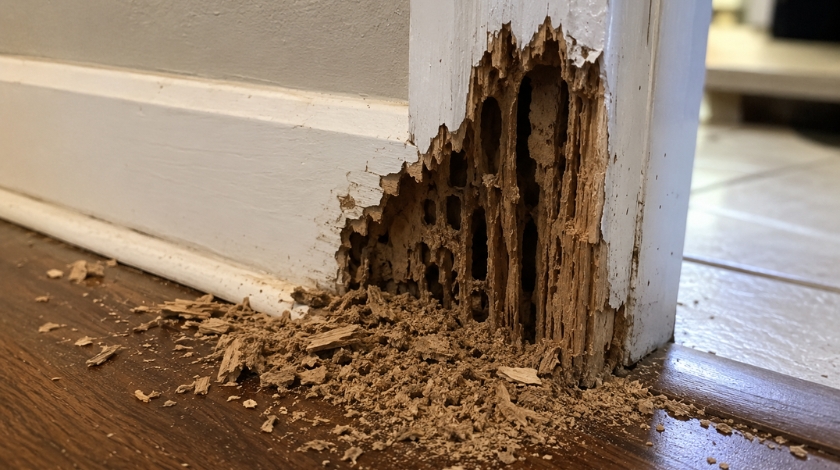
- Weak or hollow-sounding wood: Wooden materials that sound hollow when tapped or feel weaker than expected may indicate that the inside has been affected. This type of change can be a warning sign of hidden termite activity.
- Foundation-level wood damage: Areas close to the ground, including crawl spaces, foundation gaps, and wooden structures near soil, can provide access points for pests. These locations are especially important to check because they can connect outdoor activity with the interior of the home.
- Unexpected changes in wooden surfaces: Warped boards, bubbling paint, cracked trim, or other unexplained changes may indicate that something is affecting the wood beneath the surface rather than normal aging or wear.
These signs do not always confirm whether carpenter ants or termites are responsible, but they can indicate that further attention may be needed. Since much of the activity from wood-damaging pests happens in hidden areas, recognizing these changes early can help prevent the issue from becoming more extensive.
Carpenter Ants and Termites Leave Different Warning Signs
Carpenter ants and termites are often confused because both pests can affect wooden structures. However, the signs they leave behind are different because they interact with wood in different ways. Looking at the type of damage, where it appears, and the evidence around the affected areas can help reveal which pest may be responsible.
Signs That Point to Carpenter Ant Activity
Carpenter ants do not eat wood. Instead, they remove sections of wood to create tunnels and nesting areas for their colonies. Because they excavate the material rather than consume it, their damage often appears as smooth, clean galleries inside wooden structures.
These pests are commonly attracted to areas where wood has already been weakened by moisture. Leaky plumbing, roof damage, poor drainage, damaged window frames, and other sources of excess moisture can create conditions where carpenter ants are more likely to establish nests.
Homeowners may notice small piles of sawdust-like material near wooden surfaces, especially around baseboards, window frames, door trim, or other areas where ants are creating tunnels. Repeated ant activity near damaged wood can also indicate that a colony is nearby and using the structure as a nesting location.
While carpenter ants typically do not consume structural wood like termites, large colonies can still affect wooden materials over time. Addressing the conditions attracting them, such as moisture issues or accessible nesting areas, can help reduce continued activity.
Signs That Point to Termite Activity
Termites create a more serious concern because they consume wood as a food source. Subterranean termites are especially challenging for Bentonville homeowners because they typically live underground and can enter homes through small openings around foundations, crawl spaces, and other areas that are difficult to notice.
Unlike carpenter ants, termites do not remove wood to create nesting areas. They feed on the material itself, often working inside wooden structures where their activity is hidden from view. This allows termites to continue damaging parts of a home while the exterior of the wood may still appear relatively normal.
One of the most recognizable signs of termite activity is the presence of mud tubes along foundation walls, crawl spaces, support posts, or other areas where the home connects with the soil. These pathways allow termites to travel between their underground colonies and the wooden materials they are feeding on.
Termite damage can also cause wooden materials to become hollow, weak, or fragile over time. Homeowners may notice cracked wood, uneven surfaces, bubbling paint, discarded wings near windows or doors, or other changes that appear without an obvious explanation.
Because termites often remain hidden inside structures, visible damage may only represent part of the problem. Identifying these warning signs early can help determine whether termites are affecting your home and what steps should be taken before the damage becomes more extensive.
Areas Where Bentonville Homes Are Most Vulnerable to Wood-Damaging Pests
Carpenter ants and termites often take advantage of areas around a home where moisture, wood materials, and hidden entry points come together. Crawl spaces are one of the most common areas where these pests can establish activity because they often provide dark, protected environments with limited visibility. Moisture buildup, poor ventilation, plumbing leaks, or exposed wooden supports can create conditions that attract carpenter ants and allow termites to move closer to the structure.
Exterior areas around the home can also increase the risk of wood-damaging pests. Wooden decks, fences, tree branches touching the house, and landscaping materials placed too close to the foundation can create pathways for carpenter ants and other insects to reach the property. Termites may also take advantage of areas where wood is close to soil, foundation gaps, or other entry points that allow access from underground colonies.
Inside the home, areas affected by moisture or hidden structural issues can become vulnerable over time. Leaks around plumbing fixtures, damaged window frames, roof problems, and weakened wooden materials may provide the conditions these pests need to remain active. Regular attention to both interior and exterior areas can help identify warning signs before carpenter ants or termites cause more extensive damage to your Bentonville home.
Finding the Problem Early and Preventing Further Wood Damage
Carpenter ants and termites can continue damaging wooden structures while staying out of sight inside walls, crawl spaces, and other hard-to-reach areas. By the time visible damage appears, the infestation may have already affected parts of the home that are difficult to access. Paying attention to early warning signs such as wood debris, hollow-sounding materials, mud tubes, or moisture-related damage can make it easier to address the problem before it becomes more extensive.
Wood-damaging pests can be difficult to deal with because the visible signs are not always where the main activity is happening. Allen Pest Management looks beyond the surface by checking areas where carpenter ants and termites commonly travel, hide, and create damage to determine the right way to handle the problem. If you have noticed wood debris, hollow-sounding wood, mud tubes, or other signs of wood-damaging pests around your Bentonville home, contact our team today for professional assistance.