Northwest Arkansas summers bring more than heat and humidity—they bring a surge in stinging insect activity that catches homeowners off guard every year. Several species are common in the region, and each one behaves differently, nests in different locations, and presents a different level of risk. Our wasp and yellow jacket control services cover all of them, but knowing which species you are dealing with helps you understand what you are up against.
Paper Wasps
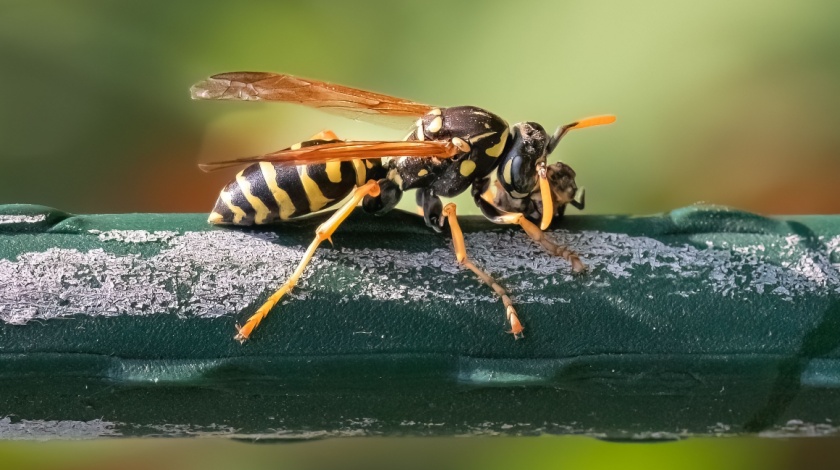
Paper wasps are the stinging insects most commonly spotted around Northwest Arkansas homes. They build open, umbrella-shaped nests from chewed wood fiber—gray and papery in texture—and attach them under eaves, inside door frames, behind shutters, and in any sheltered spot on the exterior of a structure.
Paper wasps are not aggressive by nature. They will sting if the nest is disturbed or if they feel threatened directly, but they generally tolerate human activity nearby without reacting. Colonies are relatively small, typically containing between 20 and 75 workers by midsummer. Because of their accessible nest locations and moderate temperament, paper wasps are among the easier stinging insects to treat when addressed early in the season.
Yellow Jackets
Yellow jackets are a more serious concern. They are aggressive; they sting repeatedly without provocation when a nest is disturbed, and their colonies grow significantly larger than paper wasp nests—often reaching several thousand workers by late summer.
Yellow jackets nest in the ground, inside wall voids, and in protected structural spaces. Ground nests are the most hazardous because they are easy to stumble across during lawn mowing, garden work, or any activity that involves movement over open ground. Striking a ground nest with a mower is one of the most common ways homeowners encounter a large-scale yellow jacket response. Late summer—July through September—is when yellow jacket colonies reach peak size and are most defensive.
Bald-Faced Hornets
Bald-faced hornets are closely related to yellow jackets and share their aggressive defensive behavior. They build large, enclosed gray paper nests typically suspended from tree branches, eaves, and utility structures. By late summer, a bald-faced hornet nest can contain 400 to 700 workers, and the colony responds forcefully to any perceived threat within several feet of the nest.
Their nests are hard to miss once they reach full size, but early-season nests—built in spring when the colony is just getting started—are small and easy to overlook. Treating a nest in April or May when it contains only a handful of workers is far simpler than treating the same nest in August.
Mud Daubers
Mud daubers are solitary wasps that build small, tubular mud nests on exterior walls, in garages, and under overhangs. Unlike the social species above, mud daubers do not live in colonies and are not aggressive—they rarely sting even when handled. They are more of a nuisance than a safety concern, but their mud nests accumulate on structures over time and are worth addressing.
When Stinging Insects Become a Problem
Any nest located near a door, window, outdoor seating area, or play space warrants professional treatment regardless of the species involved. For individuals with venom allergies, any stinging insect nest on the property is a risk that should be eliminated promptly.
The best time to address stinging insect nests in Northwest Arkansas is early spring, before colonies reach their summer size. Waiting until late summer means dealing with larger, more aggressive colonies that are harder to treat safely.
Allen Pest Management handles stinging insect removal throughout Bentonville and the surrounding area. Contact us for a free estimate and get nests addressed before they become a bigger problem.