Fayetteville has seen significant residential development over the past several years, and new construction homes throughout the area consistently attract wasp activity in ways that catch new homeowners off guard. If you have moved into a newly built home and are already dealing with wasps nesting around the structure, the construction itself is likely a contributing factor. Our wasp and yellow jacket control team serves Fayetteville and the surrounding area and sees this pattern regularly.
Fresh Wood and Building Materials
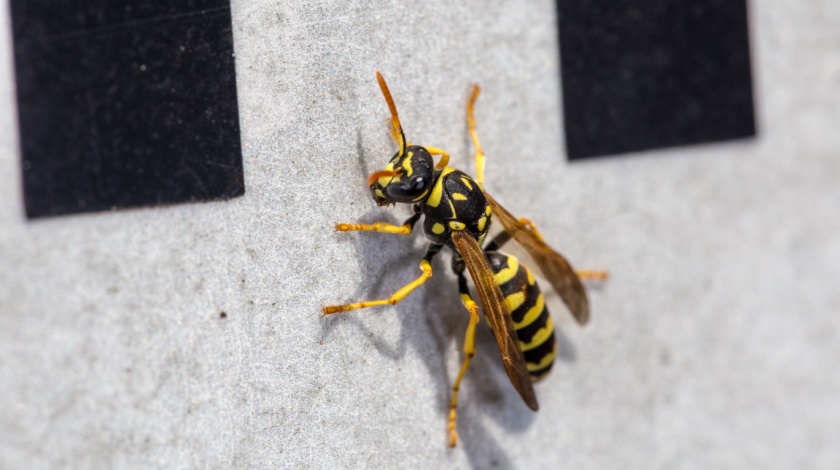
Wasps—particularly paper wasps and yellow jackets—are drawn to bare, untreated wood. They chew wood fiber to construct their paper nests, and fresh lumber, fascia boards, deck framing, and fence posts on new construction provide an accessible source of material. Older, painted, or sealed wood surfaces are less attractive to wasps because they are harder to process. New construction, where paint and sealant application may be incomplete or recent, offers more opportunity.
Open Eaves and Unfinished Gaps
New homes frequently have small gaps and unfinished spaces that become apparent after construction is complete. Gaps behind trim boards, unscreened soffit vents, spaces around utility penetrations, and areas where siding meets roofline framing all provide protected, sheltered cavities that paper wasps and yellow jackets actively seek for nest sites.
Yellow jackets in particular look for enclosed, protected spaces. Wall voids accessed through gaps in siding or soffit areas are common yellow jacket nest locations in newer construction, and nests established inside a wall void are significantly more difficult to treat than exposed nests under an eave.
Disturbed Soil Around the Foundation
New construction involves substantial ground disturbance—grading, trenching, foundation work, and landscaping installation. Freshly turned soil settles over time, and the loose, workable soil around new foundations and landscaped areas is attractive to ground-nesting yellow jackets. Ground nests are common in the first several years after construction while the soil around the structure is still relatively loose and easy to excavate.
Minimal Vegetation as a Buffer
Established neighborhoods have mature landscaping that naturally limits some wasp nesting opportunities—dense shrubs, established tree canopy, and years of foot traffic near the structure all affect where wasps choose to nest. New construction lots typically have minimal vegetation, which means wasps nesting around the structure have fewer alternative sites to choose from and are more concentrated around the home itself.
What Fayetteville Homeowners Can Do
Several steps reduce wasp nesting opportunities around a new construction home:
- Paint and seal all exposed wood surfaces, including fascia boards, trim, and deck framing, as soon as construction is complete
- Screen soffit vents and address any gaps in siding or trim where wasps could access wall voids
- Inspect the property perimeter in early spring before wasp season begins and address any nests before colonies grow
- Keep an eye on areas of disturbed soil around the foundation for ground nest activity starting in April
Early intervention is the most practical approach. A nest found in April when it contains only a queen and a few workers is a straightforward treatment. The same nest in August, with several thousand workers inside a wall void, is a different problem entirely.
Allen Pest Management provides pest control services in Fayetteville for stinging insects and a full range of other pests. Request a free estimate if wasps have already established themselves around your home.